24H Mold Inspection
Fullerton24/7 EMERGENCY(714) 888-7445
HomeOur ServicesEnvironmental Risk Assessment
our services

Environmental Risk Assessment

We identify hidden mold risks and verify that your space is safe to occupy.

About

Why Risk Assessment Matters

Even after cleanup or surface testing, questions often remain: Is it really gone? Are we safe to move forward? That's where an Environmental Risk Assessment comes in.

Ideal for:

  • Post-remediation verification
  • Pre-sale property inspections
  • Property management compliance
  • Sensitive environments (schools, offices, multi-unit housing)
Why Risk Assessment Matters

Methodology

Our Assessment Process

Step-by-step inspection to confirm your space is safe.

We inspect key areas across your property to identify visible signs of mold, moisture, or environmental risks that may have been missed in past inspections.

We use precision tools to measure moisture in building materials and collect air samples for lab analysis—capturing invisible spores that may linger in the environment.

Within 24–72 hours, you'll receive a certified report detailing our findings: mold species (if present), spore levels, moisture hotspots, and actionable next steps.

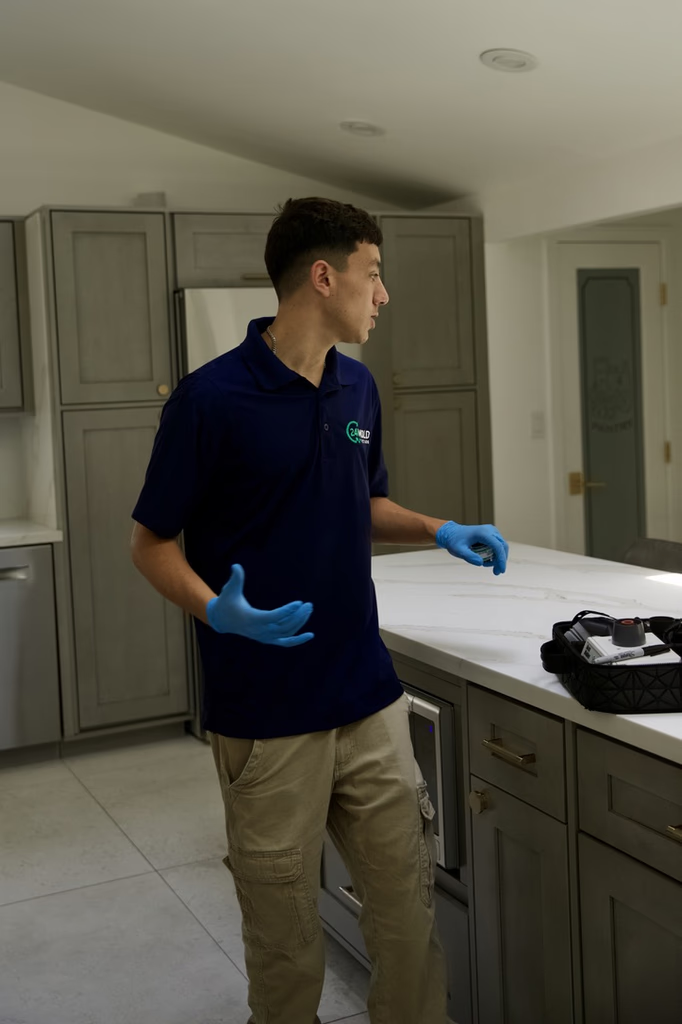
Mold inspector at work

Checklist

Is an Environmental Risk Assessment Right for You?

This service is ideal if:

  • You've had recent remediation or water damage
  • You're buying, selling, or managing a property
  • You need proof your space is safe to occupy

Still unsure? Let's talk. We'll help you decide if an assessment is the right step for your property.

Overview

What You'll Get

Certified results, safety clarity, and clear next steps—delivered fast.

1

Comprehensive Risk Report

State-certified results that summarize mold levels, moisture issues, and remediation needs.

2

Occupancy Safety Verification

Peace of mind that your property is safe to inhabit—especially critical for buyers, renters, and businesses.

3

Actionable Recommendations

If risks are found, we provide clear guidance on next steps. If not, your report becomes a safety asset.

Mold inspection Fullerton FAQ

Call For An Inspection
Yes, and it's one of the more common requests we get in Fullerton. Most Cal State Fullerton students rent off-campus in older homes and apartments concentrated around downtown and the surrounding neighborhoods, where high occupancy and turnover between school years let moisture problems go unaddressed. Under California law, a property's age doesn't excuse a landlord from maintaining habitable conditions, and students have the same tenant rights as any renter — so an inspection documents mold conditions at move-in or after a reported leak, which matters in any dispute over repairs or a deposit. Common trouble spots in student rentals are poorly ventilated bathrooms, converted or storage basements and garages, and behind-wall leaks in aging plumbing.
Fullerton's craftsman bungalows — many in and around the historic downtown, some dating to the 1910s and 1920s — were built on raised wood-frame foundations over crawl spaces, which is where much of their mold risk sits. These shallow, often poorly ventilated crawl spaces trap ground moisture, and the underside of the subfloor and floor joists can grow mold for years unnoticed. Add original or first-generation galvanized plumbing that develops slow behind-wall leaks, and roofing that has been through several replacement cycles, and older bungalows do carry more hidden moisture pathways than newer construction. The construction itself is often sound; it's the crawl space, plumbing, and roof-to-wall details that reward a closer look.
Fullerton's foothill neighborhoods — Raymond Hills, Sunny Hills, and Fullerton Hills — sit on the steep, erosion-cut slopes where the Puente Hills meet the coastal basin, and slope drainage is the defining moisture challenge there. Water moving downhill concentrates against uphill-facing walls, foundations, and retaining structures, and cut-and-fill hillside lots can direct subsurface moisture toward the lower portions of a home. Homes built into a slope often have a partially below-grade wall or a stepped foundation where seepage collects, and blocked or aging hillside drains make it worse during the rainy season. Hillside properties benefit from an inspection focused on the downhill and below-grade walls, foundation drainage, and any lower-level living space.
It's worth considering. Fullerton sits over active fault systems — the Puente Hills blind-thrust complex runs beneath the Sunny Hills area and produced the 1987 Whittier Narrows earthquake, and smaller quakes are felt regularly, including a magnitude 3.3 centered near Fullerton in late 2024. Seismic movement opens hairline cracks in stucco, foundations, and around windows and pipe penetrations, and those cracks become entry points for the marine-layer humidity and rainy-season water that then feed mold inside wall cavities. The shaking can also loosen plumbing joints, producing slow behind-wall leaks. After a notable quake, checking stucco, foundation, and plumbing for new moisture pathways is a reasonable precaution — especially in older homes.
They can. Spanish Colonial Revival and other stucco-clad homes are common in Fullerton's historic downtown and older neighborhoods, and stucco's durability can hide a moisture problem behind it. When the underlying weather-resistant barrier fails, or when cracks open from foundation movement or seismic activity, water gets trapped against the sheathing with no easy path to dry, supporting mold inside the wall assembly. Older stucco homes also tend to have original window and flashing details where intrusion concentrates. Because the damage sits behind a hard cladding, it's typically found with moisture meters and thermal imaging rather than a visual check.
If your home took on water, yes. The atmospheric-river storms that hit Orange County in recent seasons — including the late-December 2025 system that prompted a regional state of emergency — dropped heavy rain across Fullerton and northern OC, and wind-driven rain forces water through stucco cracks, roof and window gaps, and hillside drainage failures. Mold can begin growing within 24 to 48 hours of that kind of saturation, and the damage is often hidden inside walls or under flooring rather than visible, so a home that looked fine after the storm can still be developing mold. Hillside and older downtown properties are the most exposed. A moisture assessment after a wet winter catches these problems early.
They do. Historic downtown Fullerton's residential stock includes homes from the 1910s and 1920s, and a pre-purchase inspection here goes well beyond a surface walkthrough. The priorities are the raised-foundation crawl space for subfloor and joist mold, aging galvanized plumbing for slow behind-wall leaks, the attic and roof-to-wall details for intrusion from past reroofing, and stucco and window assemblies for trapped moisture. Because many of these homes have been remodeled or converted over the decades, it's also worth looking for older water damage that may have been covered over rather than remediated. An independent inspection — with no financial stake in remediation — gives a clear moisture picture before closing.

Contact

Book your Fullerton mold inspection today

Tell us what's going on and we'll respond the same day

Location

24H Mold Inspection of Fullerton

Service area neighborhoods

  • Historic Downtown Fullerton
  • Sunny Hills
  • Raymond Hills
  • Fullerton Hills
  • Amerige Heights
  • Golden Hills
  • Valencia Park
  • West Fullerton
Call For Service(714) 888-7445