24H Mold Inspection
Chula Vista24/7 EMERGENCY(619) 730-4411
HomeOur ServicesMold InspectionThermal Imaging
Mold Inspection

Thermal Imaging

Infrared cameras find hidden mold conditions and water damage before any surface stain shows up.

Overview

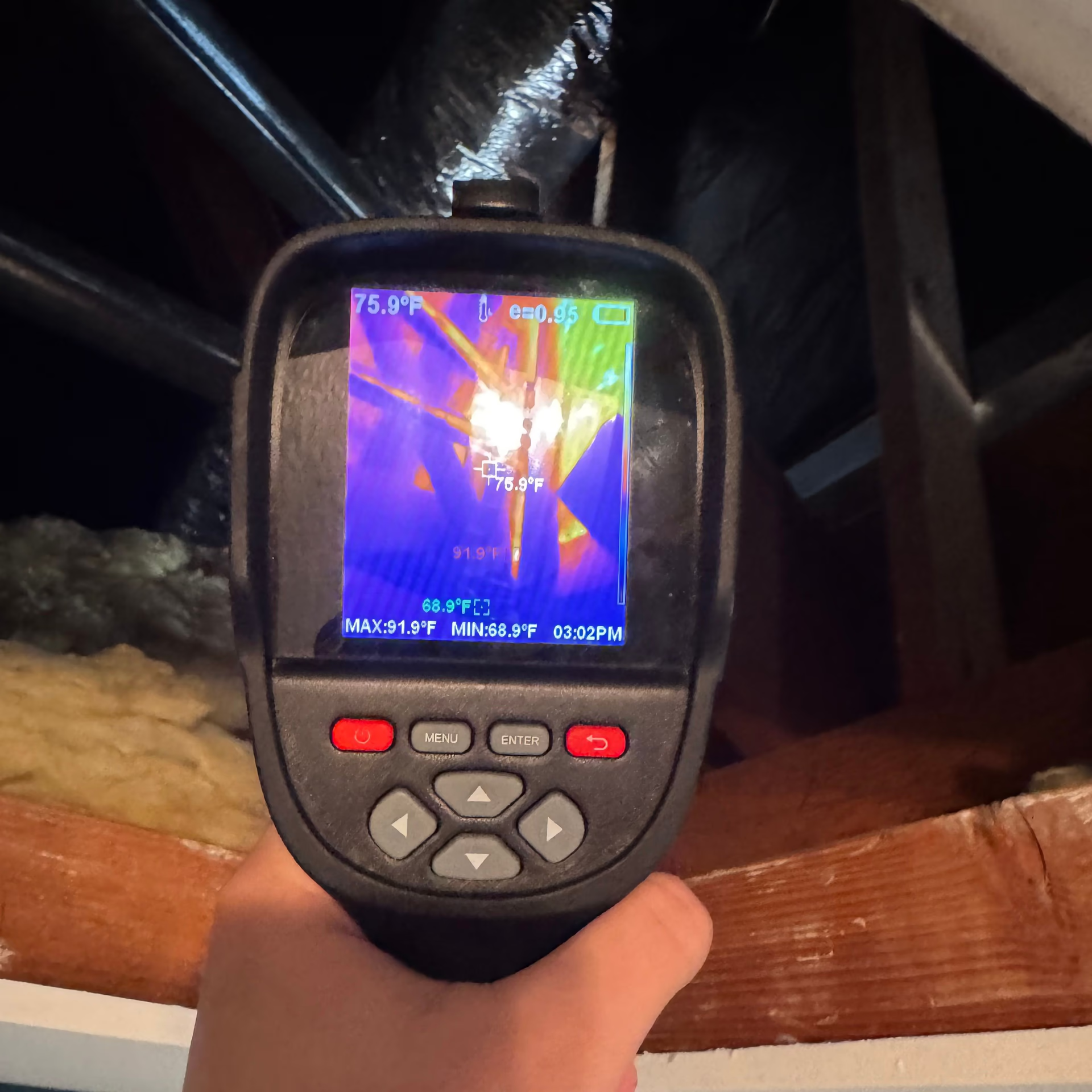
Why infrared thermal imaging finds mold others miss

Mold doesn't always announce itself. A small leak inside a wall, a stretch of failed insulation, or a cold-bridge condensation zone can build mold-friendly conditions for months before any stain reaches the surface. Thermal imaging reveals those conditions while they're still hidden, giving you a chance to address the moisture before mold has spread.

Thermal imaging detects:

  • —Hidden moisture inside walls, ceilings, and under floors
  • —Active leaks from plumbing, roofing, or HVAC components
  • —Insulation gaps and ventilation defects driving condensation
  • —Cold spots creating ideal future conditions for mold growth
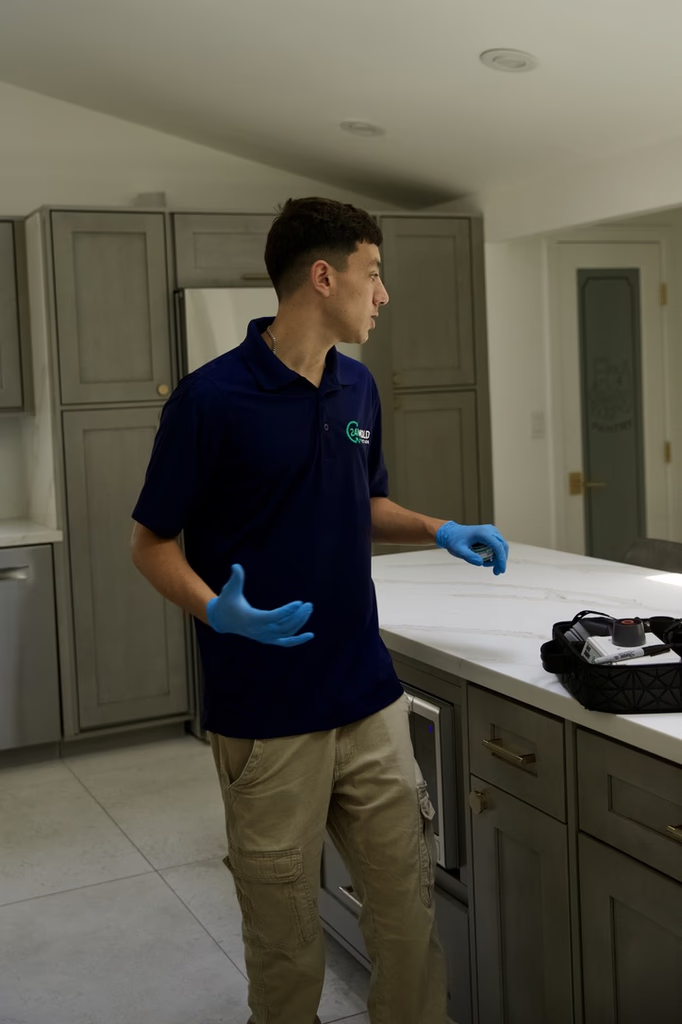
Why infrared thermal imaging finds mold others miss
Mold inspector at work

Benefits

What you get from thermal imaging

Find hidden risks early without damaging the property

  • —Non-invasive: No drilling, no cutting, no surface damage.
  • —Early detection: Catches problems before damage becomes visible.
  • —Cost-effective: Targets repairs only where they're needed.
  • —Documented findings: Annotated thermal images included in the report.

About

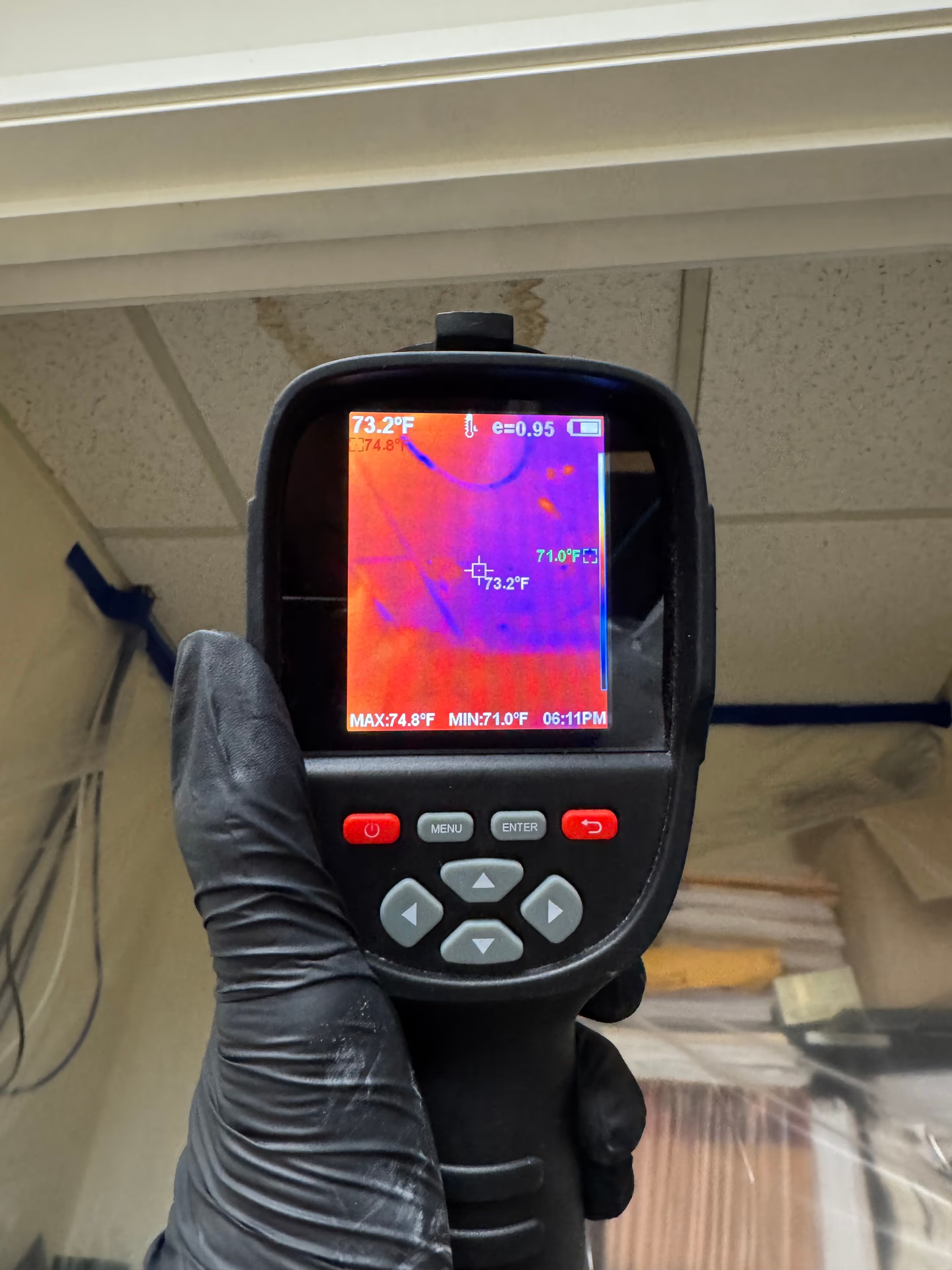
How thermal imaging mold inspection works

Our certified mold inspectors use FLIR cameras to read temperature differentials across surfaces. Cooler areas often signal water present in the material, even when no surface damage has appeared.

Our process includes:

  • —A complete thermal scan of key interior and exterior surfaces
  • —Identification of unusual cold or warm patterns in the readings
  • —Cross-checking thermal findings with calibrated moisture meters
  • —A mold inspection report including the annotated thermal images
How thermal imaging mold inspection works

Mold inspection Chula Vista FAQ

Call For An Inspection
Otay Ranch and Eastlake's HOA-managed communities carry moisture risks that individually maintained properties don't share. HOA irrigation systems run on fixed schedules regardless of rainfall, keeping soil moisture elevated against foundations year-round. Shared drainage infrastructure means a blocked catch basin or failed common-area drain affects multiple properties simultaneously — and the HOA's maintenance schedule determines when that failure gets addressed rather than the individual homeowner's immediate response. When a moisture problem originates in a shared HOA system rather than within an individual unit, the inspection findings establish which party is responsible for the remediation — a question with significant financial implications in Chula Vista's active real estate market.
Castle Park's 1950s and 1960s housing is now 60 to 70 years old, and original systems are failing in patterns. Galvanized supply lines corrode from the inside out and develop slow leaks at fittings inside wall cavities invisible until the drywall shows damage. Slab-on-grade foundations from this era have expansion joints and any cracks that have developed through decades of Southern California's thermal cycling, and those become pathways through which ground moisture migrates into the slab. Castle Park's proximity to the Sweetwater River and the Bayfront's former tidal marsh means ground moisture in the lower blocks is consistently higher than in Chula Vista's newer eastern neighborhoods.
For properties near Chula Vista's Bayfront — the former power plant site and the tidal industrial area now being redeveloped — the land use history is relevant context. Former industrial tidelands carry soil and groundwater conditions distinct from residential land, and properties in the immediate Bayfront area may have foundation moisture conditions influenced by former industrial drainage and the shallow water table of reclaimed tidal land. The inspection documents the moisture condition and its source in the current structure; soil and environmental conditions are outside mold inspection scope and belong to a licensed environmental consultant. What we establish is whether moisture is active in the building and where it's entering.
Pre-purchase inspection in Chula Vista is worth doing across all neighborhoods, with the focus varying by area. For Castle Park and the older western neighborhoods, the slab moisture profile, aging plumbing condition, and HVAC condensate management are the primary concerns. For Otay Ranch and Eastlake HOA communities, the shared building system context and irrigation drainage matter. For Rolling Hills Ranch hillside properties, slope drainage and foundation moisture from the Otay watershed should be assessed specifically. In Chula Vista's active real estate market, having independent moisture documentation before closing protects you from inheriting a long-running problem.
Most of Chula Vista's newer master-planned development is slab-on-grade construction without crawl spaces, but Castle Park and some of the older western neighborhoods have raised foundations with crawl spaces. In those properties, the crawl space is where ground moisture accumulates first — San Diego County's marine-influenced climate keeps ground moisture elevated through the late winter and spring, and original vapor barriers in older homes have deteriorated or were never installed to modern standards. Subfloor framing in persistently humid conditions develops surface mold before any visible damage appears in the living space above. The inspection maps moisture readings across the framing, checks vapor barrier coverage, and evaluates cross-ventilation.
Our Chula Vista team covers all of Chula Vista — Otay Ranch, Eastlake, Rancho del Rey, Sunbow, Terra Nova, Rolling Hills Ranch, Castle Park, and the Bayfront district — with same-day and next-day appointments and 24/7 emergency response. San Diego has its own dedicated 24H Mold Inspection page with local coverage details — if your property is in San Diego proper, that page will have the most relevant local information and contact number.
No — inspection and testing only. We never perform mold removal, remediation, or abatement. That separation is the point: the company telling you how much mold you have shouldn't profit from removing it. What we provide is the diagnosis — how far the growth extends, what moisture source is driving it, lab-confirmed species identification, and a written scope you can use to get accurate bids from several remediation contractors. In Chula Vista's HOA communities, where the question of whether moisture originated in a shared system or inside an individual unit determines who pays for the cleanup, that independence is what makes the report credible to all parties.

Contact

Book your Chula Vista mold inspection today

Tell us what's going on and we'll respond the same day

Location

24H Mold Inspection of Chula Vista

Hours

  • MondayOpen 24 hours
  • TuesdayOpen 24 hours
  • WednesdayOpen 24 hours
  • ThursdayOpen 24 hours
  • Friday6 AM – 6 PM
  • SaturdayClosed
  • SundayOpen 24 hours

Service area neighborhoods

  • Otay Ranch
  • Eastlake
  • Rancho del Rey
  • Sunbow
  • Terra Nova
  • Rolling Hills Ranch
  • Bayfront district
  • Castle Park
Call For Service(619) 730-4411