24H Mold Inspection
Burbank24/7 EMERGENCY(747) 667-4230
HomeOur ServicesMold TestingSwab Testing
Mold Testing

Swab Testing

Mold swab testing handles the textured, damp, and irregular surfaces where mold often grows without any visible sign.

Overview

Why mold swab testing matters

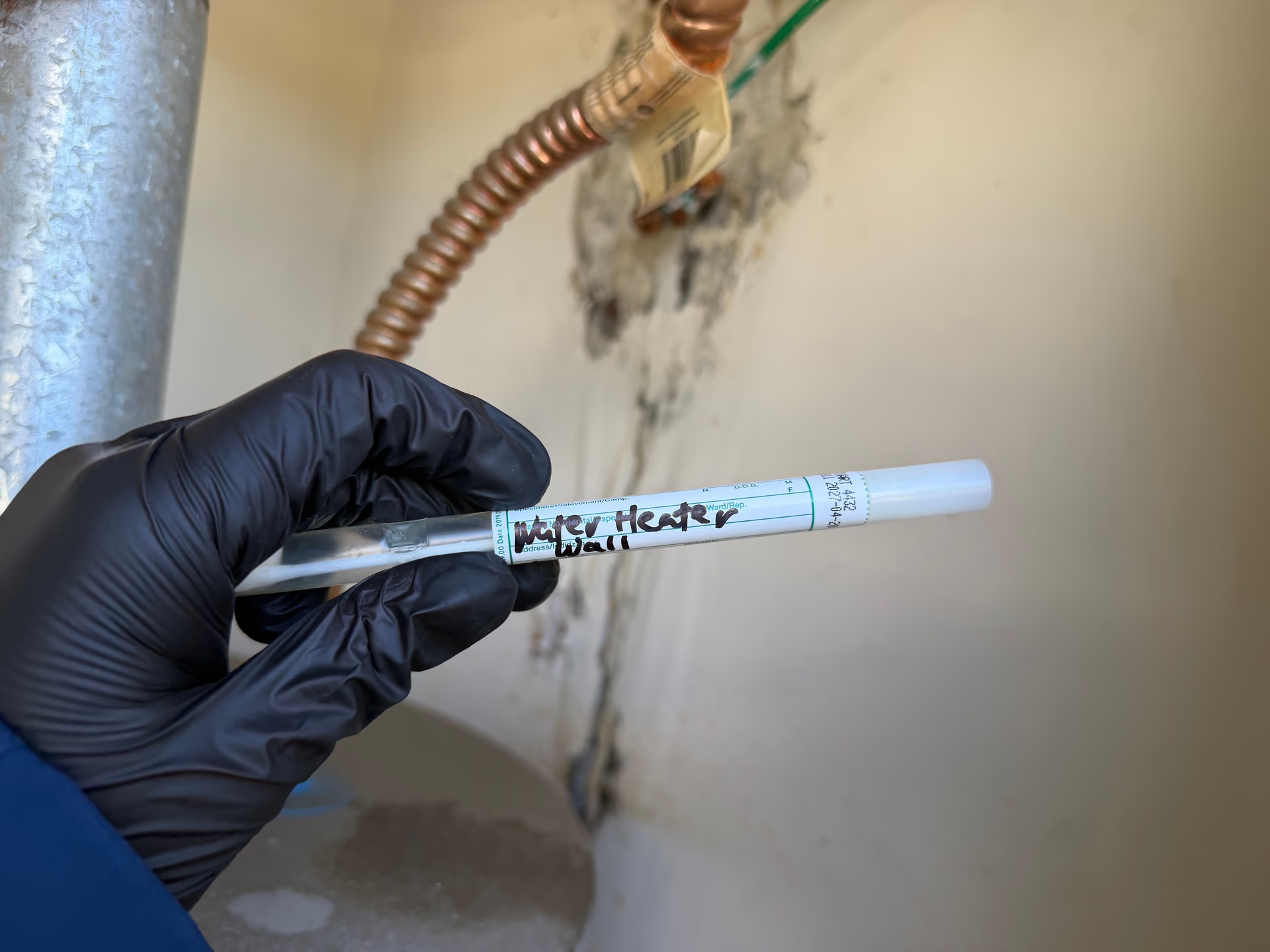
Mold grows in damp areas without always showing on the surface. Swab testing detects microbial growth on materials that are soft, porous, or moisture-prone, and is the right approach after water damage or in spaces that resist visual inspection.

Mold swab testing detects:

  • —Hidden mold on porous or textured materials
  • —Growth in damp spots like under sinks or around HVAC
  • —Contamination on organic materials including wood and fabric
  • —Mold that visual inspection alone tends to miss
Why mold swab testing matters
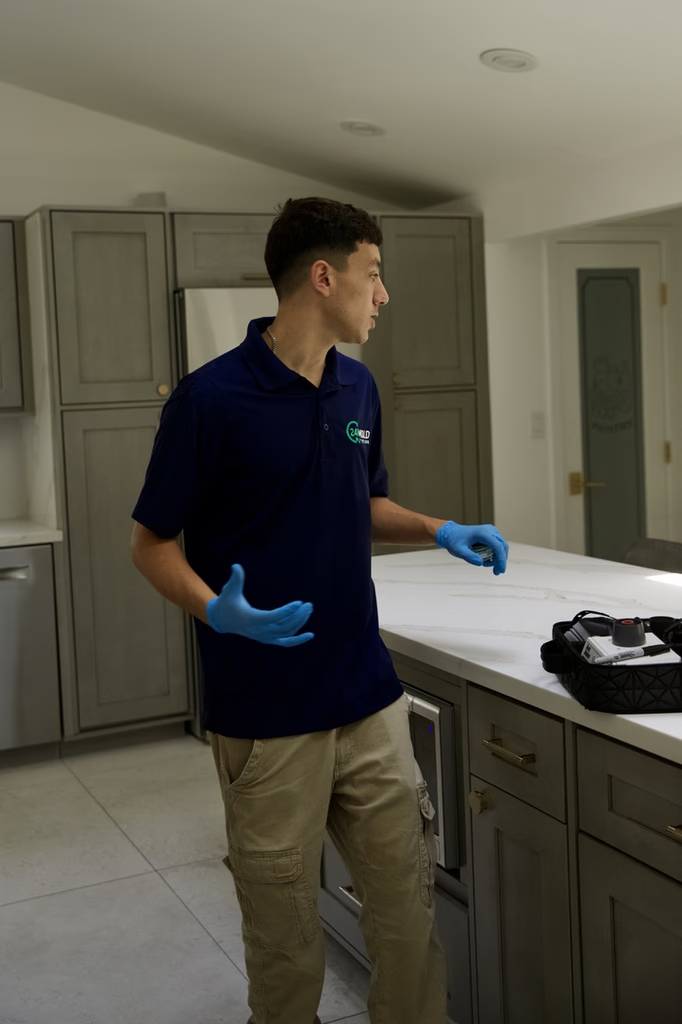
Mold inspector at work

Benefits

What you get from swab testing

A flexible method for hard-to-sample surfaces

  • —Moisture-ready: Designed for damp and water-damaged materials.
  • —Flexible: Handles uneven, porous, and irregular surfaces.
  • —Confirmatory: Validates mold presence in hidden or subtle areas.
  • —Lab-backed: Lab-verified results with species identification.

About

How mold swab testing works

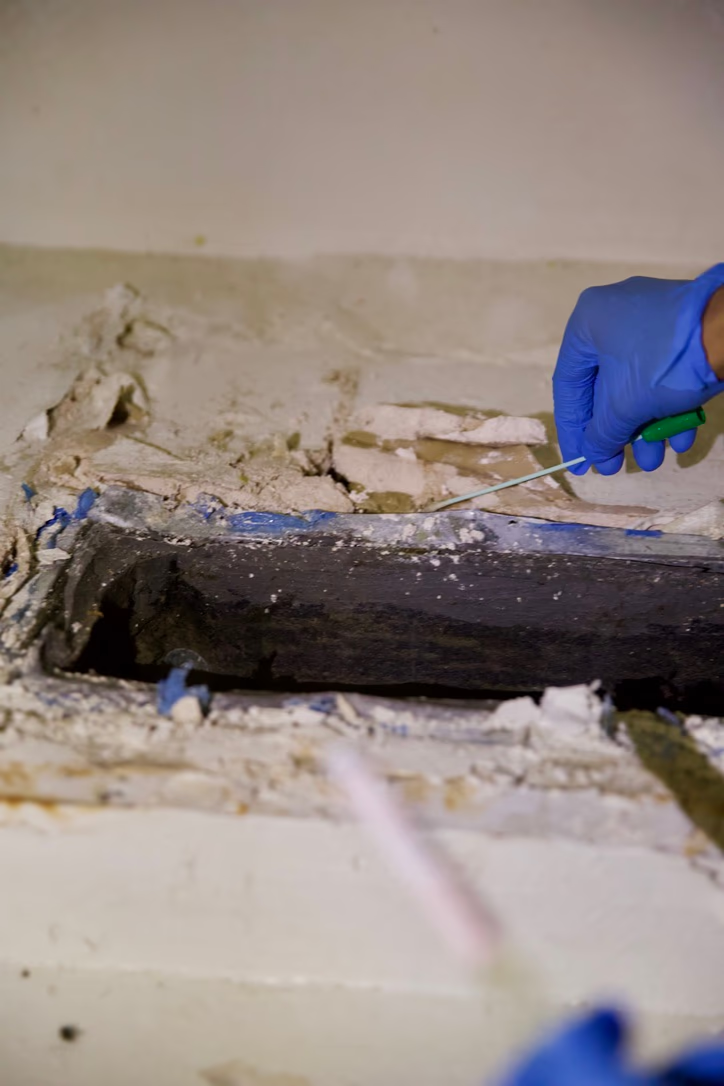
Our certified mold inspectors gently rub a sterile swab across the suspect area to collect a sample, then seal it and send it to a state-certified lab for mold species identification and contamination level.

Our process includes:

  • —Sterile collection from textured surfaces and porous materials
  • —Coverage of damp surfaces and hard-to-reach spots
  • —Lab work returning spore counts and lab-verified results
  • —A mold inspection report with clear next steps
How mold swab testing works

Mold inspection Burbank FAQ

Call For An Inspection
The Chandler Boulevard corridor and the Media District's 1960s and 1970s apartment stock is now 50 to 60 years old, and original building systems are failing in patterns across a large number of units simultaneously. In stacked apartment construction, a moisture source on one floor — a failed roof section, a plumbing stack leak, a window seal failure — travels through shared wall assemblies and appears in units below months after the source event. Original HVAC systems deposit condensate inside air handler cabinets and adjacent wall cavities when drain lines fail. Original single-pane windows condense heavily through San Fernando Valley winters, directing moisture into wall assemblies continuously. For property managers and landlords, a building-level assessment that documents which systems are contributing to moisture conditions is more useful than a single-unit inspection.
A habitability mold inspection documents the moisture and mold condition of a rental unit in a form that satisfies California's implied warranty of habitability under Civil Code 1941. In Burbank's dense rental market — the Chandler corridor, the Media District, and the older neighborhoods south of the 134 — tenants frequently report musty odors, visible staining, or respiratory symptoms that landlords dispute. An independent inspection with lab-verified findings documents what was found, where, and what the probable moisture source is. Because 24H Mold Inspection performs no remediation, the findings carry no financial interest in directing the repair to any particular scope — which is what makes the report credible to both parties and useful in a dispute with Burbank's code enforcement or housing department.
The Burbank Hills above the 134 carry hillside construction from the 1950s through 1980s where slope runoff concentrates at downslope foundations and retaining walls that are now 40 to 70 years old. The 1994 Northridge earthquake opened foundation cracks and retaining wall failures throughout the San Fernando Valley — properties in the Burbank Hills that weren't fully assessed after 1994 may have moisture pathways active for over 30 years. Cold air pools in the canyon terrain at night, driving condensation on interior surfaces in below-grade rooms that above-grade living areas don't experience. Custom homes on large hillside lots also tend to have outbuildings and detached structures that accumulate moisture independently of the main residence.
In the original residential neighborhoods around Olive Avenue and in the Media District's older apartment stock, it's one of the more consistent findings. Old Town Burbank's Craftsman and Bungalow homes from the 1910s and 1920s carry original or early-replacement galvanized plumbing developing slow behind-wall leaks and crawl spaces that predate modern vapor management. The 1987 Whittier Narrows earthquake caused widespread chimney and foundation cracking throughout the Valley that has been admitting moisture in properties never fully assessed. Media District apartment buildings carry the stacked-construction moisture migration pathways where a failure on one floor surfaces in the unit below months later.
Pre-purchase inspection in Burbank is worth doing across all neighborhoods given the housing age range. For Old Town and the older residential blocks, the crawl space, original plumbing condition, and earthquake-related foundation cracking are the primary concerns. For hillside Burbank Hills properties, the retaining wall drainage and below-grade levels matter most. For the apartment corridors, the building-system investigation is more important than the individual unit walkthrough. In Burbank's active real estate market, having independent moisture documentation before closing protects you from inheriting a long-running problem that wasn't visible during a standard showing.
Our Burbank team covers all of Burbank — Old Town, the Media District, Magnolia Park, the Chandler corridor, and the Burbank Hills — with same-day and next-day appointments and 24/7 emergency response. Several neighboring cities have their own dedicated 24H Mold Inspection pages: Glendale and Los Angeles each have separate coverage with their own local teams. Toluca Lake is served from the Burbank team. If your property is in Glendale, that page will have the most relevant local information.
Inspection and testing only. In Burbank's rental market, where landlords and tenants often have conflicting accounts of a moisture condition's extent and source, the company performing the inspection needs to have no financial interest in the cleanup work. What you receive is the diagnosis: extent of growth, moisture source, lab-confirmed species, and a written scope you can use to get comparable bids from multiple remediation contractors on the same defined terms.

Contact

Book your Burbank mold inspection today

Tell us what's going on and we'll respond the same day

Location

24H Mold Inspection of Burbank

Hours

  • MondayOpen 24 hours
  • TuesdayOpen 24 hours
  • WednesdayOpen 24 hours
  • ThursdayOpen 24 hours
  • Friday6 AM – 6 PM
  • SaturdayClosed
  • SundayOpen 24 hours

Service area neighborhoods

  • Magnolia Park
  • Chandler Park
  • Downtown Burbank
  • Rancho District
  • Burbank Hills
  • West Burbank
  • Toluca Lake (adjacent)
  • North Hollywood (adjacent)
Call For Service(747) 667-4230